Consumed by the Desert
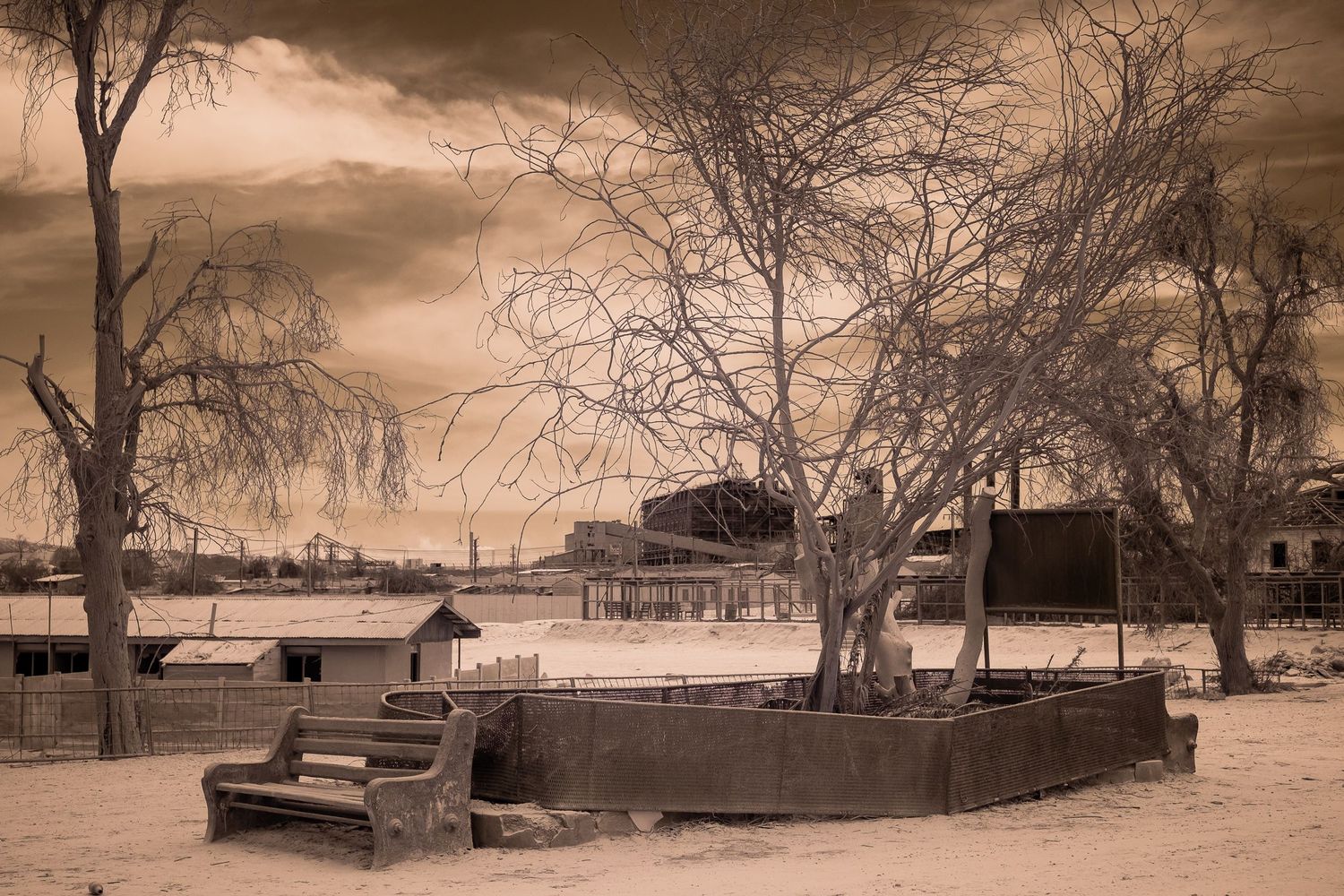
In the hyper-arid expanse of the Atacama, where rain may not fall for years and the sun can scorch by day and freeze at night, lie the ruins of a forgotten industry. For decades from the late 19th century, this region was the center of the global saltpeter boom — natural nitrate (“white gold”) extracted and shipped around the world to fertilize fields and fuel economies. Thousands of workers lived and worked here, drawn from Chile, Peru, Bolivia and beyond, forging communities around company towns like Pedro de Valdivia and Humberstone where dwellings, schools, markets, and machinery rose in the desert and thrived far from coast or city.
At their peak, more than 200 saltpeter works dotted the desert, connected by rail and dictated by the harsh logic of extraction and transport. When industrial processes in Europe made synthetic nitrates cheap and abundant, these towns were abandoned almost overnight. What remains now are echoing streets, rusting equipment, collapsed workshops and silent residences — ghostly remains of a moment when this dry earth once fed the world. The last mine to be abandoned was Pedro de Valdivia in the 70’, overnight people had to leave the place they grew up, worked studied and lived in community and scattered around Chile.
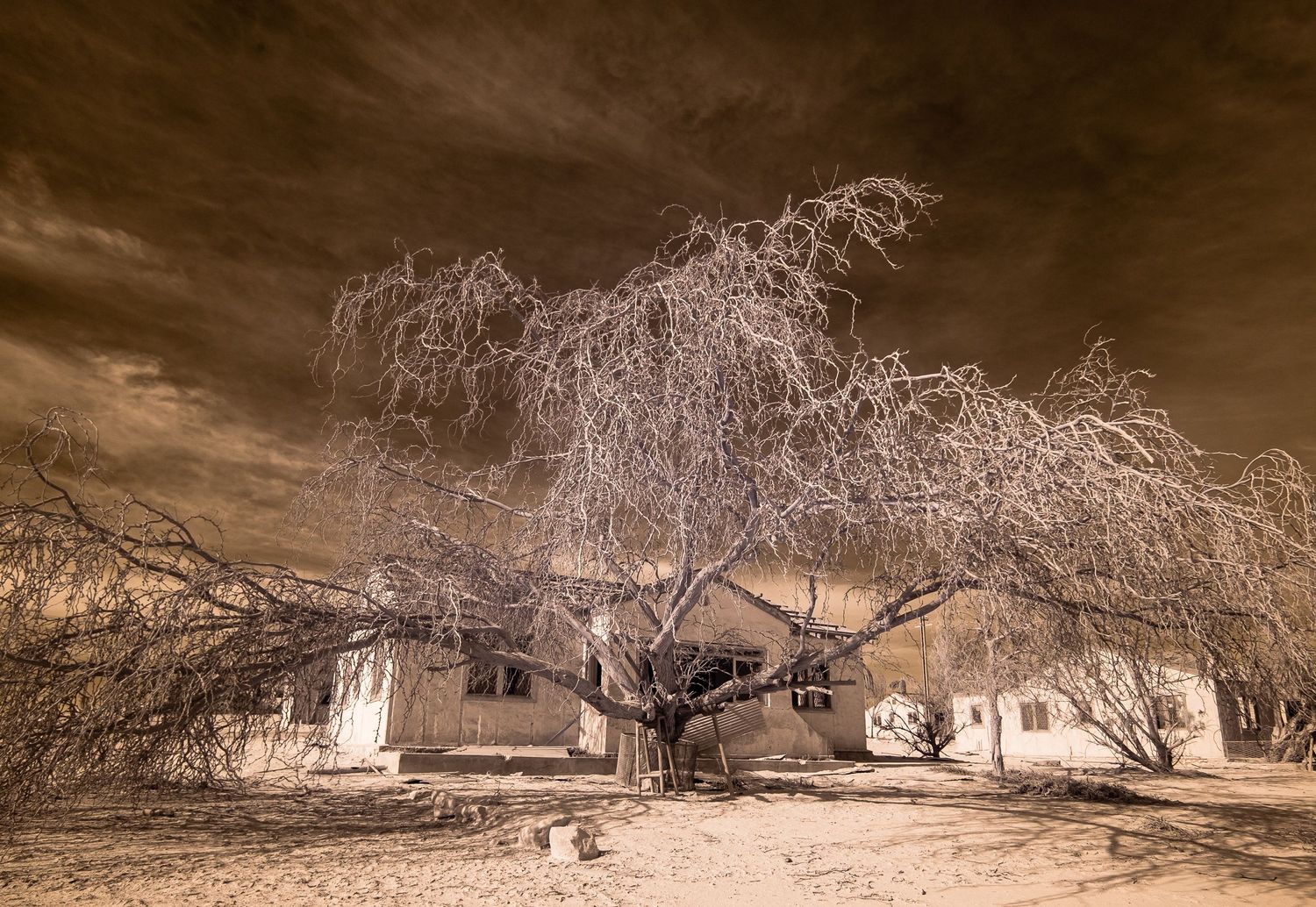
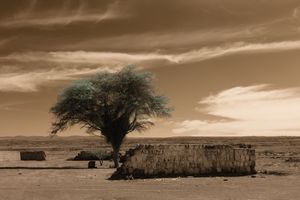
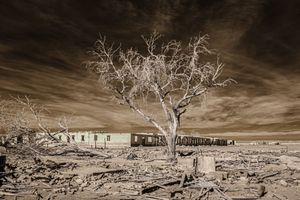
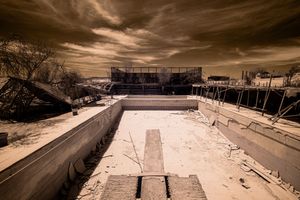
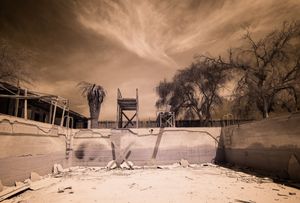
I photograph the salitreras as they are now: emptied of people, stripped of purpose, slowly absorbed by the desert. The Atacama does not erase these places; it exposes them. Walls and trees remain upright for decades, machinery rusts in place, and traces of daily life—stairs, windows, rail lines—persist with unsettling clarity. In this extreme dryness, time does not soften ruins. It sharpens them.
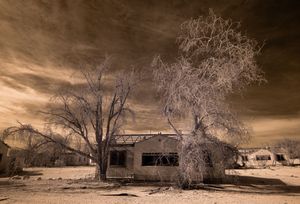
Much of this work is photographed in infrared, a deliberate choice that allows me to step away from familiar representations of abandonment and decay. Infrared light alters the relationship between surface and structure, revealing tonal shifts, textures, and contrasts that ordinary light often flattens. The desert sky becomes heavier, clouds gain presence, and the geometry of industrial forms stands out against the vastness that surrounds them. The result is not documentation alone, but a slower reading of place.
I am drawn to these sites not as monuments, but as landscapes where human ambition and geological time briefly overlapped. The salitreras speak of labor, extraction, and global demand, but also of fragility—how quickly systems collapse when conditions change. In photographing them, I am less interested in what has been lost than in what remains: the quiet persistence of structure, memory, and light in a land that continues, indifferent and enduring.
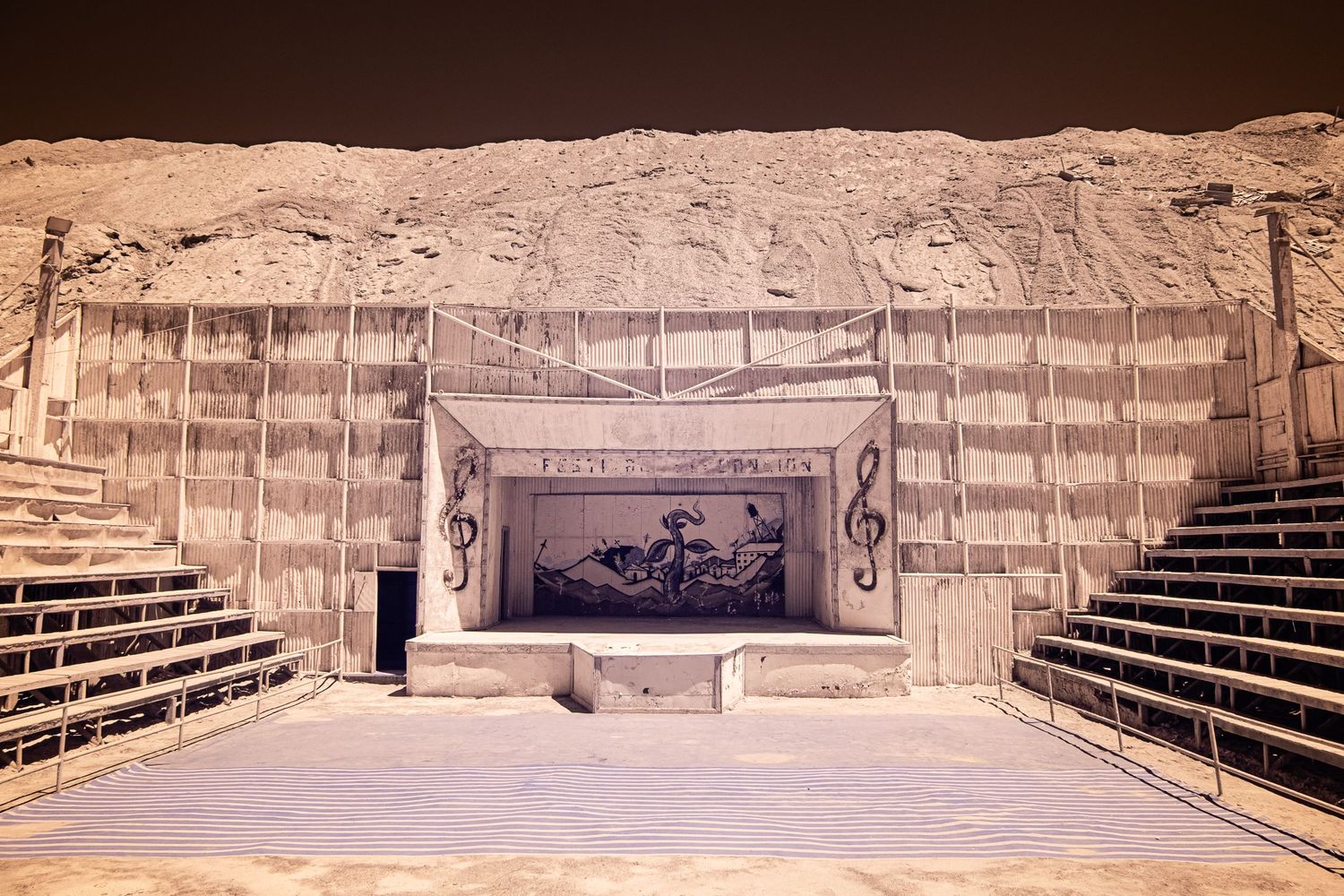
These were not only industrial sites, but places of daily life. Families lived here for generations, forming tight communities around work, schools, theaters, and shared routines in an environment that offered no forgiveness. When the nitrate industry collapsed, the departure was sudden and final. Entire towns were emptied, not gradually abandoned but left behind almost at once. What remains carries the weight of that rupture — a collective leaving that echoes through the empty streets and unfinished spaces.
Pedro, the rails, the fascination, and the saltpeper purgatory
“The train advances, with some jolts and the monotonous noise of wheels on the rails. The heat inside the carriage is suffocating. The windows are closed because outside the desert blows a fine sand that infiltrates everything and everyone in the carriage. Next to me, an accordionist plays a melancholic song. In front of me, a woman in mourning that is going to collect the body of her son, who died in one of the saltpeter mines scattered across the vast Atacama Desert. A blind man, after singing boleros to the carriage, passes by to collect a few coins from the poor passengers. The train, called Longino, slows down until it stops at the “Mirage” station.”
(Excerpt from Los trenes se van al purgatorio (The trains go to purgatory) by Hernán Rivera Letelier)
Suddenly, the flight attendant wakes me up. We are landing in Santiago, so I close the book Los trenes se van al purgatorio and prepare to land. I arrived to fulfill the dream to cross the Atacama Desert alone and photograph the remains of the old saltpeter mines. I had no idea that it would be the first of many adventures and the beginning of a passion for a fascinating story that would later make me move to Santiago. But first, let me go back a few years in time.
It was 2004, my friend Jerry Hatleben and I decided to organize our first trip to the Atacama. We first met at a photography workshop two years earlier and had done a few trips together. The desert would be our big adventure.
We landed in Antofagasta, rented a pickup and headed to San Pedro de Atacama. Halfway there, we saw a sign for the “Oficina Salitrera Chacabuco” museum. We had no idea what an “oficina salitrera” (saltpeter works) was, so we went in to take a look.
The “oficinas salitreras” were small towns were built to support the mining and trade of saltpeter, some with thousands of workers and their families. From 1850 to the 1920s, they were the world’s main source of nitrate, a raw material for fertilizers and explosives. During this period, the Chilean saltpeter was called “white gold” for the riches it generated. Our visit to Chacabuco, now an open-air museum, lasted hours and we took hundreds of pictures.
At the airport in Santiago, on our way back to the United States, we went to a bookstore where I found two novels by Hernán Rivera Letelier that used the saltpeter mines as a backdrop: “Los trenes se van al purgatorio” and “La reina Isabel cantaba rancheiras”. Through these books I became in love and encouraged to photograph what was left of the human adventure that was the saltpeter cycle in Chile.
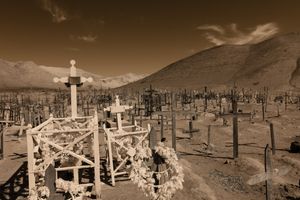
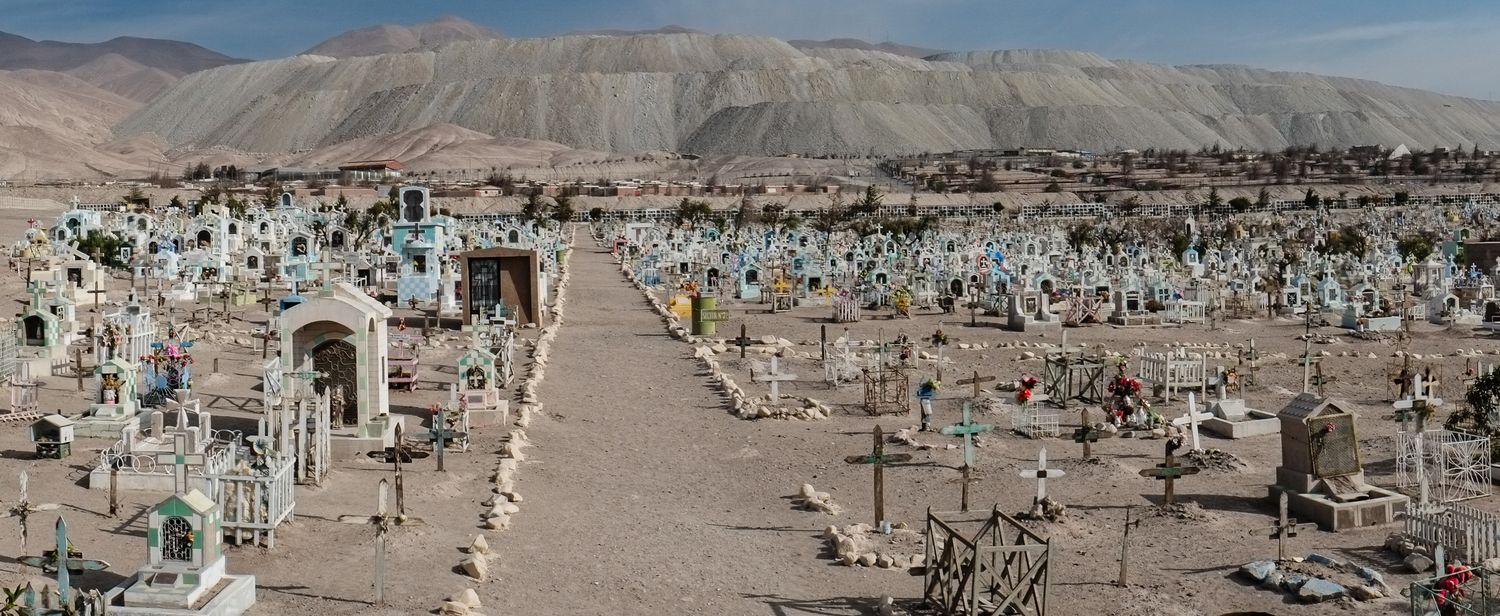
Back to when the flight attendant woke me up, after getting off the plane and going through immigration, I went to the national terminal to catch a plane to Antofagasta. This is a port city in northern Chile, a strategic place to get to the desert. From there, I crossed the Pampa del Tamarugal from north to south and east several times, looking for the remains of the oficinas. Of the larger towns with squares, theaters, pulperias (grocery stores), and even hospitals, there are still ruins of buildings and squares. Of others, there are only a few walls and cemeteries left. The ghostly atmosphere of the oficinas is enhanced by dried gardens and trees. Since everything in the desert is preserved, they are still standing with their branches half fossilized.
The train connected all the oficinas and was the main means of transportation that from Santiago connected all of them and the ports. On few occasions, by car, I followed what was left of the rails and made great discoveries. I drove without any plan, just following some old maps and the piles of gravel, remains of the saltpeper mining process, which is extracted from the desert soil. Some of these piles, visible from a long distance, are like earth’s scars from the mining process. In some cases, they’ve grown so much that they’ve buried the towns.
While planning one of the trips, I read about a saltpeter mine that was still inhabited called Maria Elena. The last “living witness” of the saltpeter cycle. It would be the destination of my next expedition. In addition to photographing Maria Elena, I wanted to explore the Oficina Pedro de Valdivia, which was closed down in 1996, but was supposedly in good condition.
When I arrived in Maria Elena I booked into the only hotel in twon and next morning before sunrise, I left for Pedro de Valdivia, crossing the “Paciencia” (Patience) plain, a landscape of destruction due to mining. On the way, I saw two oficinas, José Francisco Vergara and Coya Sur, which had been abandoned for a long time. Along the way, I saw several crosses in memory of the workers that died there. In the religious syncretism of the ancient inhabitants of the Atacama, the spirit of a dead person remains where the person dies, along the roads there are many “animitas”, which are memorials to the dead, usually displaying personal objects of those who have passed away.
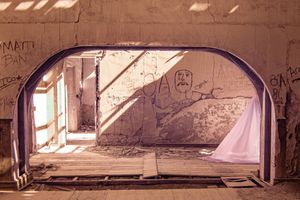
With the sun rising on the horizon, I arrived at an entrance of Pedro with a sign that said no pasar (no trespassing), I did anyway. I walked in through a side street, and was shocked to see houses, offices, a church, an open-air theater, a movie theater, an engineers’ club, fossilized trees and gardens, all well preserved. It was like entering a post-cataclysm world, a ghost town where everything was covered with a layer of the fine acidic dust that is constantly blowing in the desert., the last oficina to be built, started operating in 1931 and, at its peak, had 14,000 inhabitants. It was a complete town, with schools and even a football stadium. Its residents had a sense of community that continues to this day, renewed at an annual reunion, when they return to the town to remember the happy years they spent there.
Pedro was a victim of the autophagy of the saltpeter mining. The sheer amount of gravel and the low price of saltpeper as fertilizer sealed the death of that place. In June 1996, the mine administration announced that the town would be abandoned. There were protests, but there was nothing people could do. They left the town with their few belongings and scattered throughout Chile in search of work.
The town square and the pulperia were the center of life in Pedro de Valdivia. Today the bandstand with its dry trees and the only remaining bench are covered with dust. The theater in the square showed the latest Mexican movies starring Luis Aguilar, and American movies starring John Wayne, narrated in my imagination by Maria Margarita, A Contadora de Filmes[1] (the movie teller), who every night, in her house, passionately retold the movies she had seen during the day to friends that couldn’t afford the ticket.
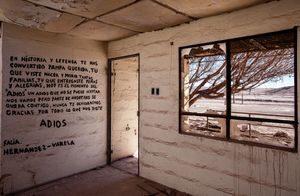
Of all places, the hospital was the most emotional. The first time I walked through the empty corridors, I arrived at what used to be the operating room, with messages written on the walls like “The ... brothers were born here”[2] and “You and I, Erica, were born here.” In another room, I read “From 1943 to 1969, we had the best years of our lives in Pedro, and we’ll never forget that. Thank you, Pedro, for everything you gave us.”
But not everything is sadness and melancholy. On the first Saturday of June, the place is full of life again. It’s the Pedro Day, when many of the old inhabitants return to the town. Some camp in their old houses, others occupy the schools, while some old stores reopen as improvised bars or kitchens. The streets are filled with music and thousands of people who come from many places to pay homage to their beloved Pedro, reconnect with old friends, and celebrate the spirit of community.
The church gets a coat of paint, the floor is washed, and the altar once again celebrates an official mass. The theater comes alive with shows and the whole town smells of assado and choripán. Children play in the squares again, filling the air with life and joy. At the end of the day, there’s a parade of old pedrinos dressed in folk costumes and old cars, with the presence of authorities.
In the central square, a loudspeaker plays the rancheras of the past all day long, as if inviting the living and the dead to join the celebrations. The next day, everyone leaves and the town is deserted again, left with its past and its spirits, making Pedro de Valdivia a great animita.
[1] A Contadora de Filmes is another excellent book by Hernán Rivera Letelier, and now a movie directed by Lone Scherfig with a script by Walter Salles.
[2] Names omitted for privacy.